


Where Land and Water Meet: Duvall Farm is a rare Eastern Shore offering—408± acres that blend meaningful conservation efforts, productive farmland, and refined residential improvements in a remarkable setting between Easton and Oxford. Comprised of 20 recorded parcels, the farm presents exceptional opportunities for conservation, recreation, legacy ownership, and easement potential. At its heart is an authentic Tennessee Pioneer-inspired pond-front lodge, accompanied by a hand-hewn log guest cabin, extensive trails and farm lanes, and a diverse landscape of restored wetlands, woodland, upland habitat, and scenic fields.
More than acreage, Duvall Farm is a place shaped by decades of stewardship. Productive farmland exists alongside thriving wildlife habitat, creating an environment that supports agriculture, sporting traditions, and conservation while preserving the property's enduring character. Just minutes from both Easton and Oxford, Duvall Farm offers remarkable privacy, architectural authenticity, and a rare opportunity to own one of Maryland's most distinctive legacy properties.
New Offering Listed at $6,375,000
Duvall Farm
408± acres in Talbot County, Maryland


Aerial
Perspective

 |  |  |  |  |  |
|---|
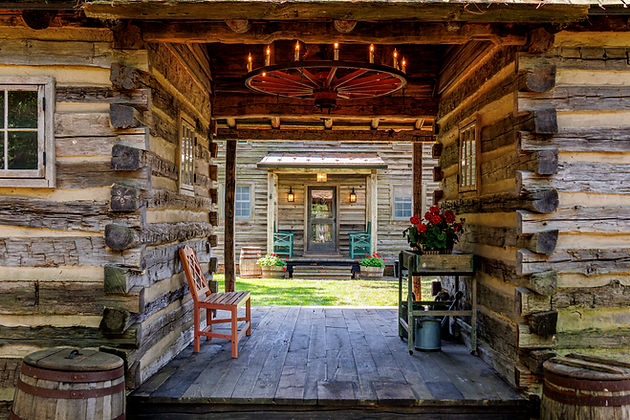
Main Lodge | Gallery


Built in 2006 by Ilex Construction, Duvall Lodge is an exceptional retreat that blends Tennessee Pioneer architecture with the enduring charm of authentic log construction. Designed as a step back in time—with every modern comfort—it offers refined rustic living in a setting that embraces the outdoors.
The exterior is classic and understated, featuring weathered wood beams and a full wraparound screened porch that overlooks a peaceful pond. Inside, the great room makes a striking impression with exposed beams, soaring ceilings, and a two-story masonry fireplace that grounds the space with warmth and grandeur. Natural light fills the lodge through generous windows and French doors that open onto the porch, seamlessly connecting indoor and outdoor living.
Thoughtfully appointed for both relaxation and gathering, the interior features wide-plank wood floors, curated antique furnishings, layered rugs, and handcrafted details that speak to the home’s heritage. The kitchen and dining areas are welcoming and functional, ideal for hosting in style. A handsome mudroom with built-in cabinetry and a dedicated gun room add to the lodge's practical charm.
Sleeping accommodations are found in the loft, which includes a half bath, while a full bath on the main level serves the shared living spaces, along with the hand-hewn log guest cabin. Throughout, rustic textures are thoughtfully paired with modern finishes. Additional highlights include a proper woodshed, a backup generator, and quality craftsmanship evident in every detail.
Duvall Lodge is a curated homestead—designed to host, gather, and reconnect with nature in enduring style.

Main Lodge | Floor Plan
Guest Cabin | Gallery


Shaded under tall pines and overlooking a peaceful clearing, the guest cabin at Duvall Lodge offers a simple and comfortable retreat. Constructed with hand-hewn logs and traditional craftsmanship, the cabin includes a cozy living space ideal for one guest, complete with a half bath. Across the open breezeway is a separate storage room, and nearby, an outdoor shower and wash station add to the cabin’s functional charm.
Farm Highlights
& Improvements

Map Overlay of 20 Parcels
Duvall Farm is a significant holding bound by Llandaff Road to the North, Old Trappe Road to the East, Oxford Road to the West, and the headwaters of Trippe Creek to the South. Located 8 miles from Easton / Newnam Airfield (ESN), 4 miles from Downtown Easton and 8 miles from Downtown Oxford, the farm is ideally located to easily access the goods and service and many attractions offered by Talbot County.
Habitat, Woodlands, Water and Farming
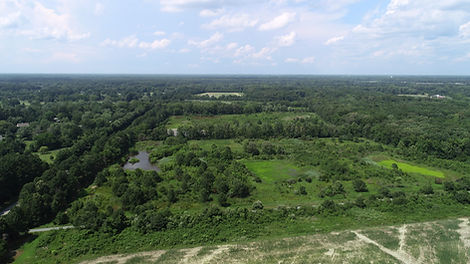
More than 185± acres of Duvall Farm are dedicated to restored habitat through the Conservation Reserve Program (CRP), including extensive vegetative buffers and wetland cells that reflect decades of stewardship. Years of careful management have enhanced the water quality of Trippe Creek, increased wildlife diversity, and preserved the natural landscape along one of Talbot County's designated Scenic Byways. The farm remains in active cultivation across approximately 50± acres through local farming partnerships, producing corn, soybeans, sunflowers, and millet. Custom food plots for upland game and waterfowl further enrich the property's ecological diversity, creating a landscape where agriculture, habitat restoration, and sporting traditions exist in remarkable balance.

Duvall Farm
Proximity Map
Articles
The Talbot Spy: "Design with Jenn Martella: “Duvall Lodge”"
October 9, 2025 by Jenn Martella
**Please Note: This article was written prior to the current offering. References to 30 parcels and approximately 525 acres describe the original Duvall Farm offering. The current offering consists of 20 recorded parcels totaling 408± acres.**
Duvall Farm comprises 30 recorded parcels that total 524.9 acres, 151 of which are protected by the Maryland CREP (Conservation Reserve Enhancement Program). This state and federally funded program enables landowners to improve their property by controlling soil erosion, establishing and enhancing a wildlife habitat and improving water quality by taking agricultural land out of production for ten to fifteen years. Conservation practices include forested riparian buffers adjacent to streams and restoration of wetlands. Having had the privilege of touring this very special place, I am very grateful for the CREP.
There's a lot more going on at the Duvall Farm than just a lodge. Wood duck boxes and blue bird boxes, for instance, rising out of the marsh with guards attached to keep small predators out of the nest. Mallard nesting cylinders, held off the ground with tripods, also spot the property off state Route 333, Oxford Road. Almost a third of the 500-acre Duvall Farm is in conservation programs, another third is used for agriculture and the rest is woodland. It is a showcase for property that has been taken out of commercial agriculture and put into conservation. "We took 80 percent of it out of commercial agriculture and put it into conservation," said John "Chip" Akridge, who along with his wife Sally owns Harleigh Farms, which owns Duvall Farm. The Duvall Farm and Lodge will be featured in the Talbot County House and Garden Tour May 15, and displays will be set up in the lodge with people to answer questions about the conservation project. The emphasis on conservation was two-fold, Akridge said: To provide habitat for waterfowl and bobwhite quail, and to improve the quality of the water runoff into the Chesapeake Bay. "We've had success at both," Akridge said. The work at Duvall Farm can also provide a demonstration for other land owners, Akridge said. Although Duvall Farm is a work in progress, some parts of the restoration showed surprisingly quick results, Akridge said. "It really doesn't take that long," he explained. "We brought the ponds back and we had ducks in the water before the vegetation grew back." Recent weather has also had an effect on the property. The multiple heavy snows of the winter, combined with the heavy rains that followed in the first days of spring, meant heavy runoff into the watershed, bringing in more sediment and more agricultural chemicals and nutrients that are still leaching out of the ground. The repeat snows this winter were particularly hard on the quail, which rely on seeds and vegetation at ground level. "We've been feeding them all winter," Akridge said. But the quail are still a success story. "In terms of success of the program, we have been able to propagate bobwhite quail," Akridge said. "There are more than we started." Oysters are a tough animal to restore to an area. "Oysters will take a little longer because because of the years and years of commercial agriculture," Akridge said. One of the first steps, he said, was to acquire enough land around the headwaters of Trippe Creek to help control the chemical and nutrient runoff from agriculture. "But it's really coming along here lately." Another variable in an oyster's life is the quality of the water bottom. "We will be testing different bottoms for oysters to grow," Akridge said. "If there is too much sediment, the spat (baby oysters) sink into the mud and die. "We're going to try to create a hard bottom using recycled materials, such as concrete, brick and oyster shells. We're also looking to put down filter cloth first so the spat don't sink into the mud." "The water quality of Trippe Creek has changed," Akridge said. "We control most of the watershed. The oyster quality has also improved, and I'm convinced it's because of the water quality." Harleigh Farms bought the property six years ago, Akridge said, with the aim of stopping it from being developed. "There was a 23-lot subdivision already platted out," Akridge said, "and I didn't really want 23 houses there. That drove the timing of the purchase." The Duvall farm also made the third large tract of land around the Trippe Creek Akridge had purchased, all contiguous. The conservation project has been in coordination with Conservation Reserve Program, administered by Farm Service Administration, and the Wildlife Habitat Incentives Program at the federal level, and the Conservation Reserve Enhancement Program at the state level. The contracts with the conservation agencies generally run on 10- to 15-year cycles, said Clay Robinson, wildlife manager of Harleigh Farm, and the Duvall property is in the middle of its programs. The programs pay an annual rent payment per acre, Robinson said, to keep the land in conservation. The payment is "very competitive" with farm rental rates, he said. To start, the programs pay a large part of construction costs for putting the land into conservation, Robinson said. "When you put the land into grassland it doesn't cost much, but putting in ponds take a lot of work," he added. In addition to the program-related conservation, Robinson said the farm leaves some crops for the game. "Instead of harvesting every single inch, we leave some of the standing crops for the deer and birds," he said.
Star Democrat: "Farm returns crop land to natural home"
April 7, 2010 by David Everman
***Please Note: This article was published in 2010 and reflects Duvall Farm as it existed at that time. References to the property's acreage, parcel count, and conservation program participation do not correspond to the current offering of 20 recorded parcels totaling 408± acres.***
reach out

